


Our History
Scotscraig Golfing Club’s history extends back over 200 years, and was designed by the game’s greatest architects, Davie Robertson and Old Tom Morris, then later refined by James Braid.
Founded in 1817 by some members of the St. Andrews Society of Golfers (later to become the Royal and Ancient Golf Club) who wished to play more golf than the Society’s occasional meetings afforded them, Scotscraig in the 19th century was an exclusive club for gentleman golfers, first captained by William Dalgleish. Scotscraig is one of the game’s most important and historic courses, as well as a modern-day championship venue.
Scotscraig was originally a six-hole course laid out across the Garpit Race Course, and in fact the first two holes are still exactly as they were 200 years ago. Today, our 14th is named Garpit, a long par 5 which runs close to historic Garpit House.
The Gold Medal, first won by Sir Hugh Lyon Playfair, Provost of St Andrews, and subsequent Captain of the R&A, is still played for today, and is one of the oldest medals still played for in the game.
Today Scotscraig remains pivotal to Scottish Golf, a championship links course proud to count Justin Rose amongst its honorary members.

Westward Ho and the famous “Knoll”
The 4th hole at Scotscraig, Westward Ho, is a short dogleg par four. Its approach is deceptively simple: a raised green sits above the fairway, demanding precision rather than brute strength. Designed by James Braid over 100 years ago, with its green perched high above the fairway, repelling weak shots on all sides, appearing impossibly small from a distance, the 4th at Scotscraig is the inspiration for one of the defining templates of America’s Golden Age of golf course design: the “Knoll.”
Piping Rock Club in Locust Valley, New York, is home to the first and closest American example of the Knoll. From there, the concept was spread though American golf course design by C.B. Macdonald and Seth Raynor, and now appears at a remarkable collection of American courses including Yale Golf Course, Midland Hills Country Club, Minnesota Valley Country Club, Fishers Island Club, Yeamans Hall, the Country Club of Charleston and the historic Lido, which even went as far as to faithfully recreate the knoll at their 13th, after the original course was lost during the Second World War.
Of course, versions of the knoll vary, from the most faithful recreation at Piping Rock Club, to more modern homages, such as at Sleepy Hollow Country Club, where architect Gil Hanse created a new Knoll at the 9th to reinforce the course’s connection to the father of American golf architecture, CB McDonald. There is a direct thread which runs though James Braid’s Scotscraig, CB McDonald’s inestimable influence, to Gil Hanse’s work on some of America’s most respected modern courses.
What we know, is that Westward Ho sits at the beginning of a design lineage that evolved, adapted and inspired generations of architects.
Members and visitors standing on the 4th tee today can look to the elevated green and see Braid’s original design idea that was to cross the Atlantic and influence American golf course architecture. That makes Scotscraig’s Westward Ho a must-play for golfers interested in Scottish links, and for those intrigued by how ideas travel through centuries of design, and continue to define some of America’s most revered golf courses even today.

Golf’s First Green Jacket
Scotscraig Golfing Club introduced a formal green dinner jacket in 1823, more than a century before Augusta National made the tradition famous for the Masters tournament. While members kept a traditional red jacket for playing golf, club records show they added a distinct green jacket featuring black velvet collars and cuffs specifically for formal club dinners. Members who failed to wear their green jacket in the clubhouse faced a strict penalty: a fine of two bottles of port or claret.

Historic Clubhouse
Our 125-year old Clubhouse pays homage to our history, with the recent installation of our Playfair Trophy Room. Named for founding member, Captain, and Provost of St Andrews Sir Hugh Lyon Playfair, a truly remarkable man and an important part of Scotscraig’s story, the trophy room showcases our most important trophies, medals and salvers. We believe that golf’s greatest stories should be lived, shared and passed on, and visitors are welcome to visit the Playfair Trophy Room, or indeed enjoy drinks, lunch or privately dine surrounded by more than two centuries of golfing history.
Modern Day Scotscraig
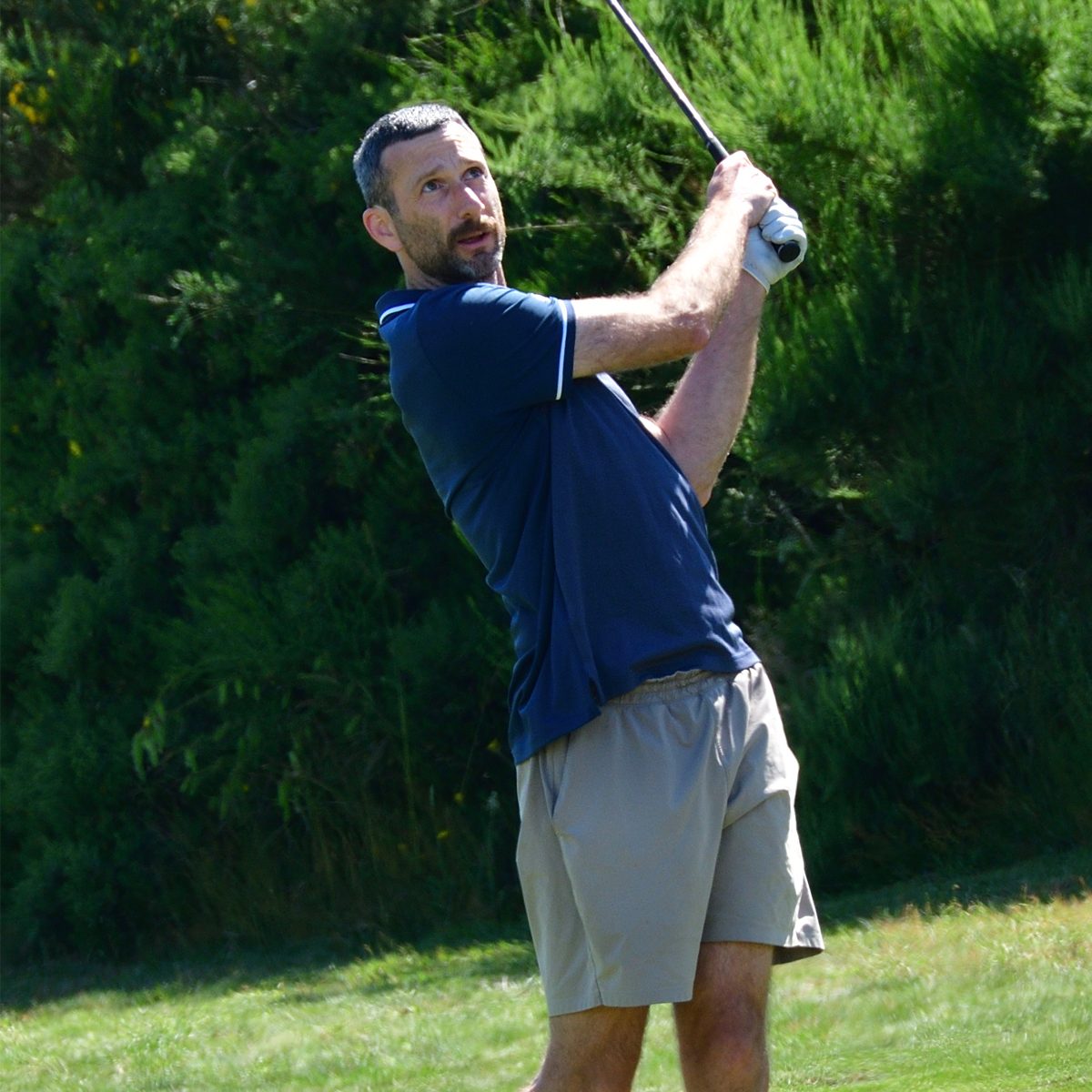
Scotscraig continues to play a pivotal role in Scottish golf, having hosted the Final Qualifying for The Open Championship six times, been a qualifying venue for the Senior Open Championship, and host of the Scottish PGA Championship in 2023 and 2025.
Justin Rose is a lifelong honorary member here at Scotscraig, having played in an Open Qualifying in 1995; his affiliation with the club continues to this day.
Scotscraig has recently enjoyed significant investment across course and clubhouse, and remains one of Fife’s most popular courses, with proximity to St Andrews, Dundee, and Carnoustie making it a natural inclusion for many golfing visitors to Scotland.